
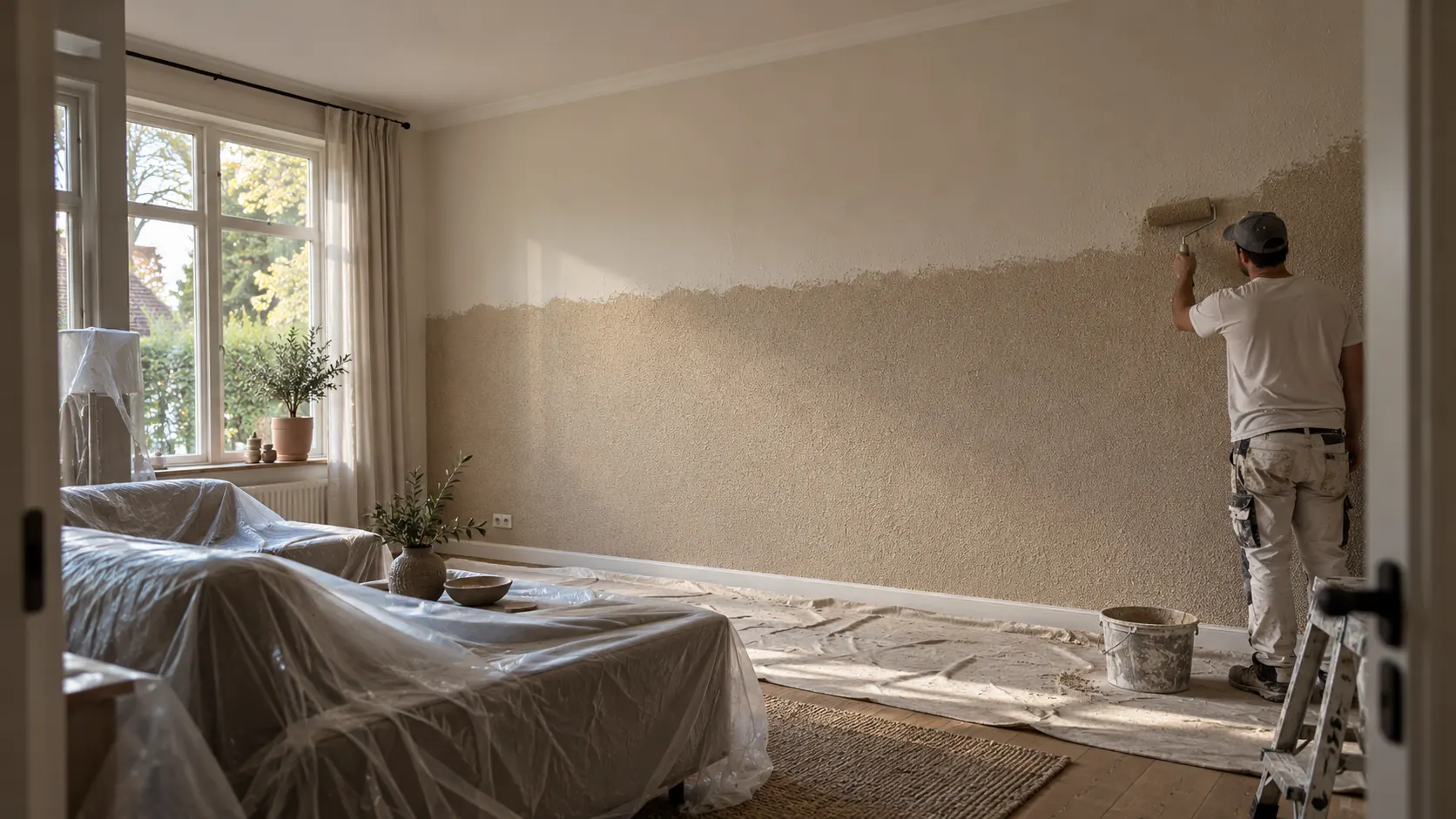
A subtle texture that belongs in the room
Sand texture uses fine aggregate within a coating or texture material to create a subtle, consistent surface pattern. It can add visual depth, soften minor surface variation, or help a repaired area coordinate with an existing textured finish.
The finished appearance depends on the aggregate, product consistency, application tool, roller direction, and drying conditions. A sample area is useful because small changes in technique can make the texture look heavier, lighter, or less uniform.
The wall still needs to be clean, stable, and properly prepared. Significant defects should be repaired rather than hidden under texture, and patched areas may require primer so the material dries and bonds consistently.
What goes into a sand texture application project
- Assessment of the existing wall and texture
- Protection of floors, trim, fixtures, and nearby surfaces
- Minor patching, sanding, and primer where needed
- Mixing and controlled application of the texture material
- Coordinated finish paint when included in the scope
Why the details matter
Consistent material and technique help prevent obvious roller patterns, heavy areas, bare spots, and mismatched repairs. A controlled application creates texture that looks intentional rather than uneven.
Questions to settle before the project
How is a wall prepared for sand texture?
Repair holes and cracks, remove loose material, and prime absorbent patches as needed. Make a sample that shows grain size and application pattern before treating the whole wall; texture will not stabilize damaged drywall.
How does paint change the textured look?
A flatter coating can keep the texture subtle, while a higher sheen makes its high points more noticeable. Samples in the room’s daylight and evening light help judge both color and shadow.
What changes the texture quote?
Surface repair, masking, wall or ceiling height, matching an existing pattern, and whether primer and finish painting are included affect the work. Blending a small patch can take more care than treating a full wall.
Can texture hide a bad repair?
It can soften slight differences but will not conceal loose tape, major ridges, movement cracks, or moisture damage. Correct the substrate first; where an old texture cannot be matched closely, texturing to a corner may look more consistent.
Sand Texture Application in our service area
Need painting in Madison or a nearby town? Start with your location:
Also serving: Oregon, Mount Horeb, Stoughton, Cross Plains.
Questions about sand texture application
Is sand texture the same as popcorn texture?+
No. Sand texture is generally a finer wall or ceiling finish, while popcorn texture is much heavier and more pronounced.
Can sand texture cover damaged drywall?+
It may soften very minor variation, but cracks, holes, loose material, and significant defects should be repaired before texture is applied.
Can a new textured area match an existing wall?+
A close blend is often possible, but the original product, age, application method, paint, and lighting all affect the match. A sample helps set expectations.