
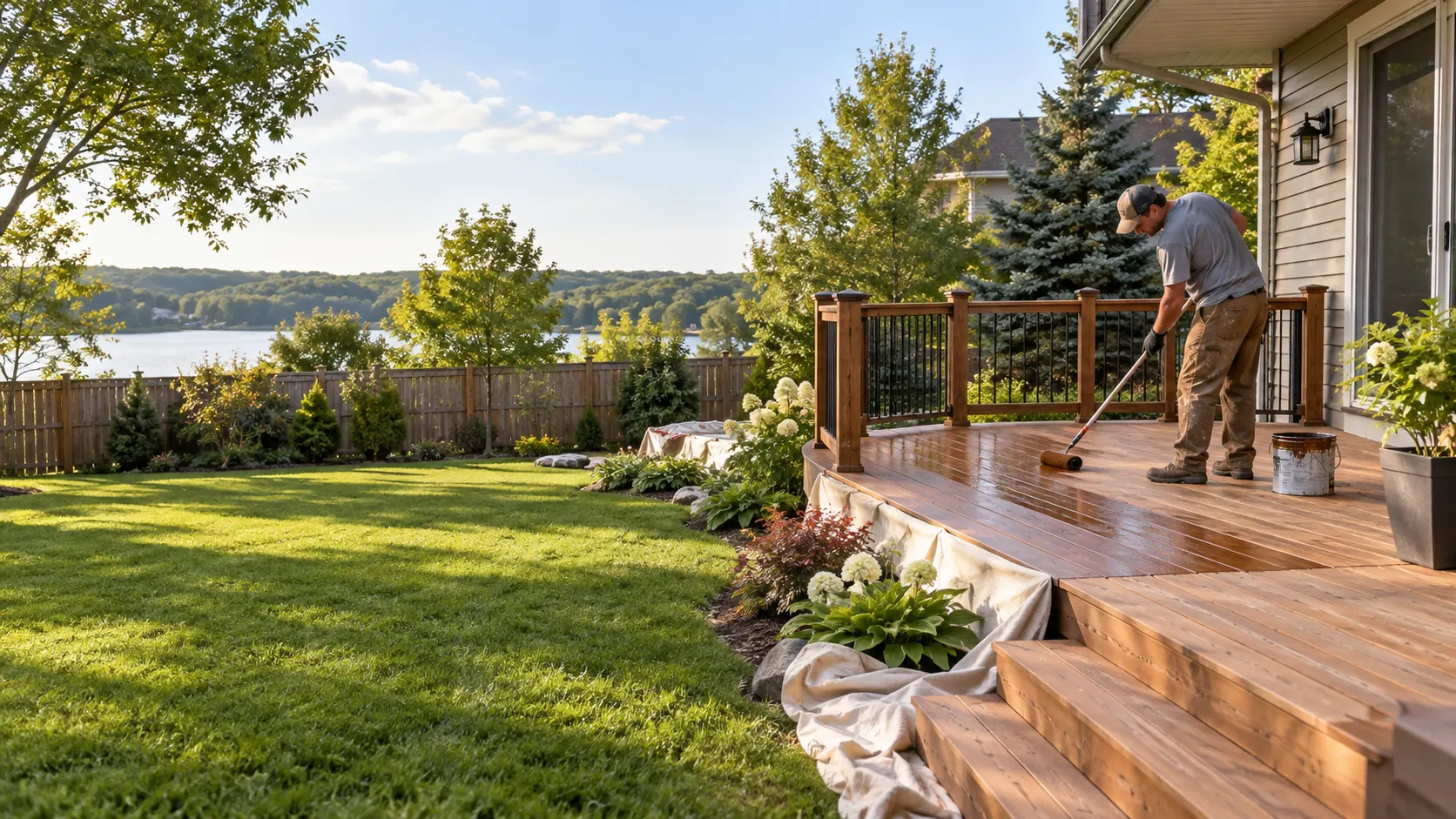
Give outdoor wood a finish that suits Wisconsin weather
Decks and fences take direct sun, standing snow, rain, dirt, and repeated wet-dry cycles. A new finish can improve appearance and slow moisture absorption, but the product has to suit the wood, the exposure, and whatever coating is already present. Applying stain over gray fibers, mildew, failed film, or damp wood usually leads to an uneven result and shorter service life.
Preparation begins by identifying the wood and existing finish, then checking for loose boards, raised fasteners, decay, peeling coating, algae, mildew, and areas that stay damp. Cleaning removes surface contamination; sanding or stripping may be needed where old material is loose, glossy, or incompatible with the proposed finish.
Clear water repellents, lightly pigmented finishes, semi-transparent stains, and solid-color stains do not behave the same way. The choice affects how much grain remains visible, how much weathering is disguised, and what preparation will be required the next time the surface is maintained. A sample area helps confirm both color and absorption before the whole structure is coated.
What goes into a deck & fence staining project
- Deck boards, stairs, railings, privacy screens, and wood fencing
- Cleaning appropriate to the wood and existing coating
- Scraping, sanding, or stripping where the previous finish has failed
- Minor surface preparation around fasteners, splinters, and rough edges
- Clear, semi-transparent, or solid-color finish selected for the condition
Why the details matter
Horizontal deck boards wear differently from vertical railings and fence boards. Careful preparation, dry wood, compatible products, and attention to end grain and high-wear areas help the finish age more evenly and make later maintenance more manageable.
Questions to settle before the project
What prep should outdoor wood get?
Clean away dirt and failed finish, allow the boards to dry to the coating maker’s requirements, and replace unsound pieces. Weathering and old film coatings can require different prep. Madison rain and overnight dew can narrow a suitable application window.
Transparent, semi-transparent, or solid stain?
A more transparent finish shows more grain but offers less color coverage; a solid stain hides more of the wood and prior discoloration. The old coating, wood condition, maintenance preference, and deck versus vertical fence exposure shape the choice.
What affects the price of staining?
Board condition, rail and baluster detail, cleaning or stripping, access underneath, square footage, and the number of sides on a fence all matter. Ask whether the scope includes steps, railings, posts, and nearby protection.
When should boards be replaced first?
Discoloration alone may be handled during prep, but soft, split, unstable, or badly cupped boards need evaluation before staining. If a film finish is peeling widely, a quick new coat is unlikely to hold without removing the failed material.
Questions worth answering before painting
Deck & Fence Staining in our service area
Need painting in Madison or a nearby town? Start with your location:
Also serving: Oregon, Mount Horeb, Stoughton, Cross Plains.
Questions about deck & fence staining
Is deck stain different from deck sealer?+
The terms overlap, but a clear sealer mainly limits moisture absorption while a stain adds pigment and color. More pigment generally changes the appearance and provides more protection from sunlight.
Can a semi-transparent stain go over old solid stain?+
Usually not without removing the opaque coating first. The new product must be compatible with the existing finish and able to reach or bond to the prepared wood.
How do I know when a deck is ready for another finish?+
Look for fading, exposed or gray wood, peeling film, rough fibers, uneven absorption, and areas where water readily darkens the boards. The old coating and wood condition determine whether cleaning alone is enough.