
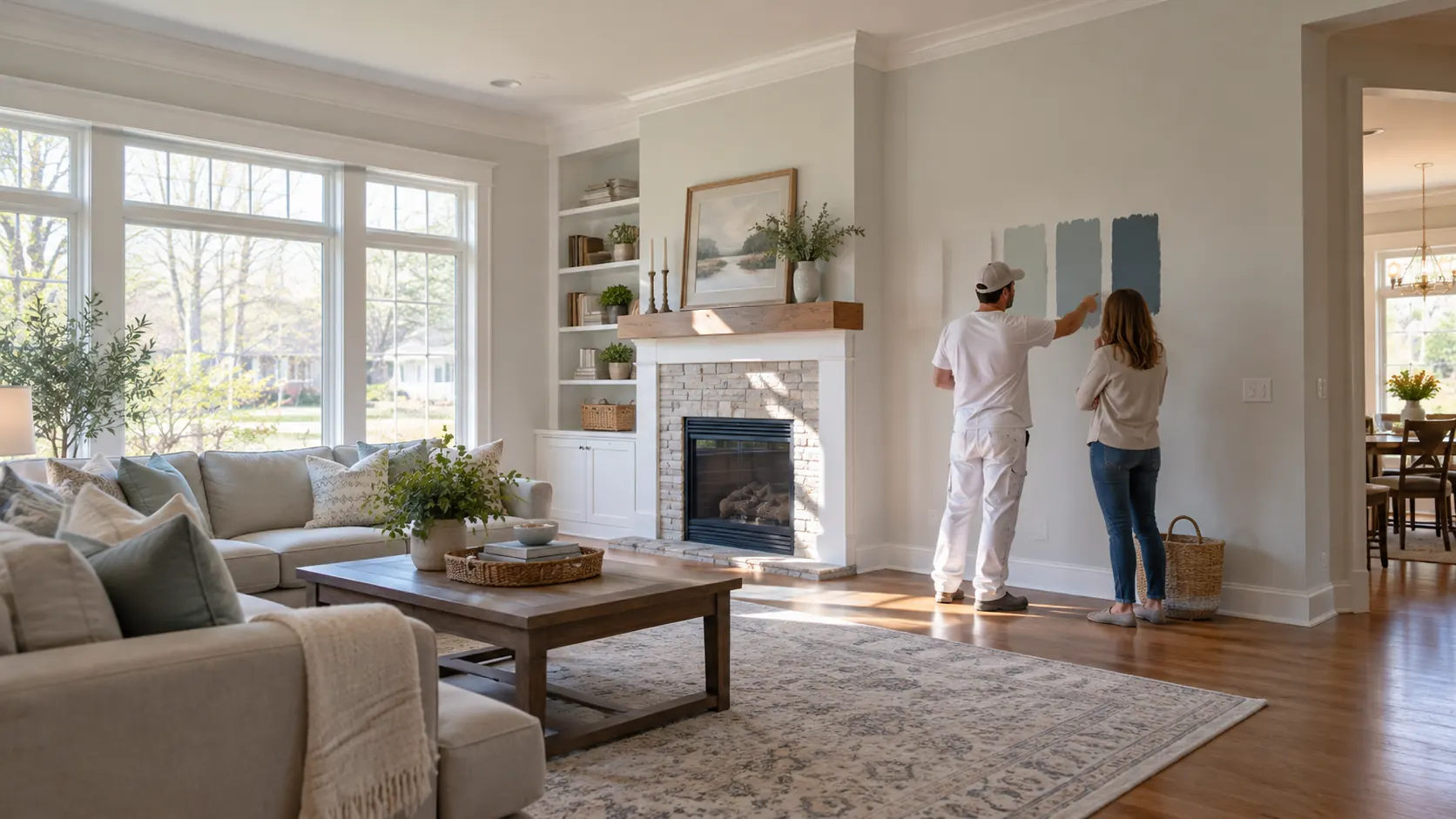
Find a color that works in your light
Color matching helps coordinate new paint with an existing wall, trim, cabinet, exterior surface, or design element. A physical sample or electronic color reading can provide a strong starting point, but the final appearance also depends on sheen, lighting, surrounding colors, surface texture, and the age of the existing coating.
Existing paint can fade, yellow, collect residue, or change appearance as it wears. For that reason, a formula match alone may not look identical once it is applied next to an older finish. Sample testing allows the color and sheen to be evaluated under the property’s actual lighting.
When an exact touch-up blend is unlikely, repainting to a natural break—such as the full wall, trim section, or connected surface—can create a more consistent result.
What goes into a color matching project
- Review of the existing color and surface condition
- Physical sample or electronic color reading when possible
- Comparison of undertones and sheen
- On-site sample placement in relevant lighting
- Recommendations for touch-up versus full-surface painting
Why the details matter
Choosing color from a small chip alone can be misleading. Testing the proposed match in the real room helps account for daylight, artificial light, flooring, furniture, and adjacent finishes before the full project begins.
Questions to settle before the project
What should be brought to a color match?
A clean physical sample, leftover can, or removable piece can help. Note the room, lighting, surface, and old sheen. An electronic reading is a starting formula, not a guarantee that aged paint will disappear under a touch-up.
Does sheen matter as much as color?
Yes. A matching hue in a different sheen can look like a patch, especially with side light. Test the proposed paint on the actual wall and look at it at different times of day.
What affects the estimate for a match?
Sampling time, number of candidate colors, surface repairs, and whether the job is a touch-up, full wall, trim run, or several rooms affect the scope. Keep the tested formula and product with the project record.
When should the whole wall be repainted?
If the old coating has faded, collected residue, or changed sheen, even a close formula can show. Repainting from corner to corner often gives a better result than repeatedly adjusting a small touch-up.
Questions worth answering before painting
Color Matching in our service area
Need painting in Madison or a nearby town? Start with your location:
Also serving: Oregon, Mount Horeb, Stoughton, Cross Plains.
Questions about color matching
Can old paint be matched exactly?+
A very close match is often possible, but aging, fading, sheen changes, and surface texture can keep a touch-up from disappearing completely.
Does lighting change how paint color looks?+
Yes. Daylight direction, bulb temperature, shadows, and nearby colors can all make the same paint appear different throughout the day.
Should I test a color before painting the whole room?+
Yes. A sample on the actual surface provides a more useful preview than viewing a small chip by itself.