
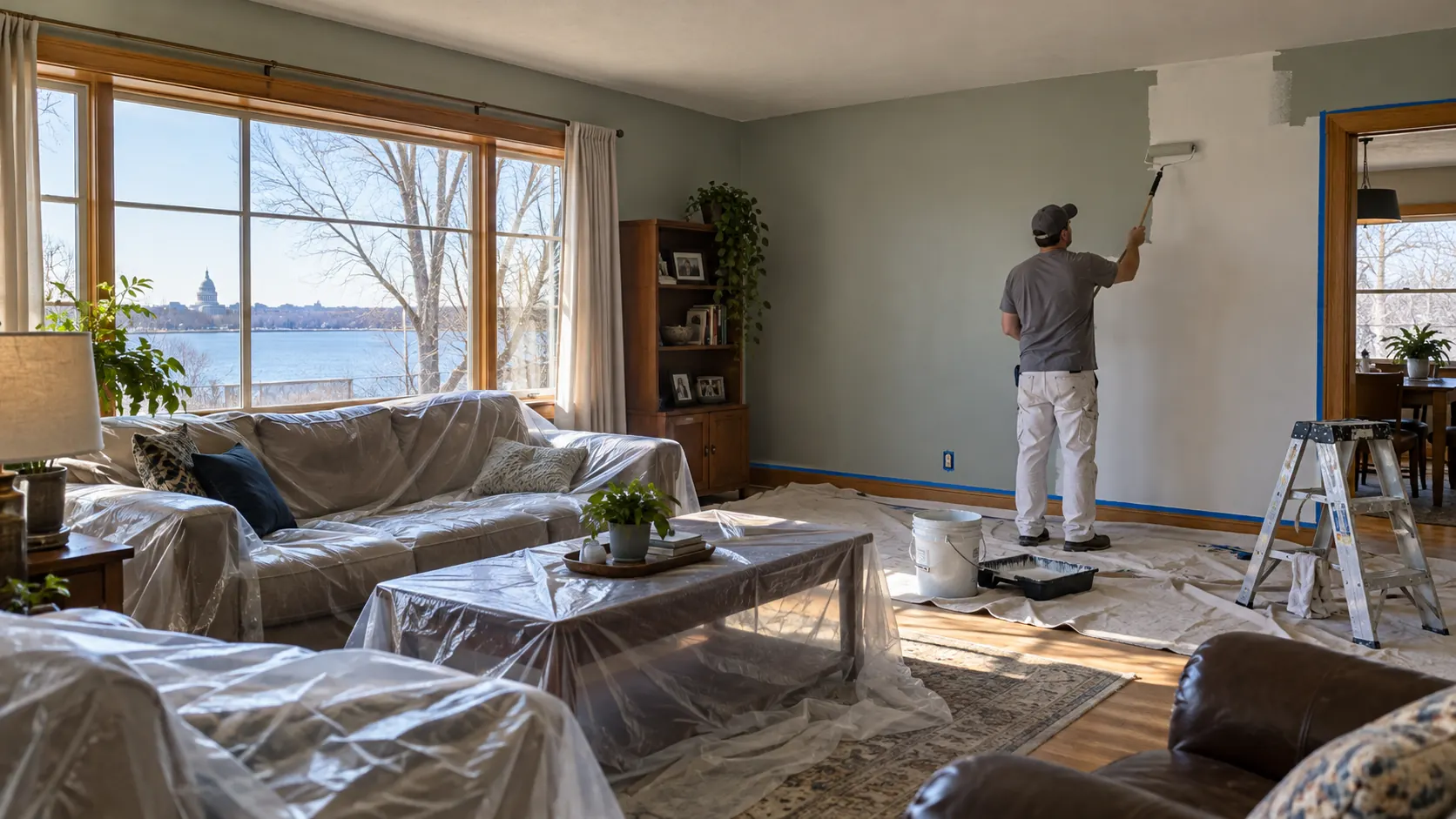
Make your rooms feel like yours again
Interior painting can change one room or tie a whole house together. Before choosing a color, decide which surfaces belong in the project: walls, ceilings, doors, baseboards, window trim, or built-ins. A quote for walls alone is a different job from a room that also needs patching and woodwork.
Look closely at the walls in daylight and under lamps. Nail holes, cracked caulk, uneven old patches, smoke residue, and water stains can still show through fresh paint. Stains and moisture need their cause addressed; the repaired surface may need a different primer from the rest of the wall.
The finish depends on how the room is used. A low-sheen wall can soften glare in a living room, while a more washable coating may make sense in a busy hallway or kitchen. Ask how furniture and floors will be protected, whether rooms can remain in use, and how many coats are included.
What goes into a interior painting project
- Rooms, walls, ceilings, and trim identified in the scope
- Protection of floors, furniture, fixtures, and adjacent finishes
- Cleaning, patching, sanding, caulking, and primer where needed
- Paint and sheen selected for the room and surface
- Finish coats, touch-ups, and cleanup spelled out in the estimate
Why the details matter
The price changes with the surfaces included, ceiling height, wall condition, repairs, color changes, and how much furniture must be moved or protected. Listing those details up front makes it easier to compare estimates for the same work.
Questions to settle before the project
What should happen before interior painting starts?
The room needs clear access, covered floors and furniture, and a close look at the walls. Grease, dust, nail holes, loose caulk, and old patches are dealt with before primer and paint. A water stain needs its leak fixed first.
Which finish works in a busy room?
A flatter finish can keep wall imperfections less noticeable, while a washable low-sheen or satin product often suits halls and kitchens. Judge samples in both daylight and evening light; Madison’s short winter days can change how a color reads.
What changes the cost of painting a room?
Walls only cost less than walls, ceiling, doors, and detailed trim together. Ceiling height, furniture, repairs, deep color changes, and the number of coats also matter. Ask for those surfaces and preparation steps to be listed separately.
Can a damaged spot be touched up instead?
A small mark on a sound, fairly recent finish may blend. An older or faded wall, a changed sheen, or several patches will often show the touch-up; painting to a corner or the full wall gives a cleaner break.
Questions worth answering before painting
Interior Painting in our service area
Need painting in Madison or a nearby town? Start with your location:
Also serving: Oregon, Mount Horeb, Stoughton, Cross Plains.
Questions about interior painting
Do I need to move everything out before interior painting?+
Usually the room does not need to be completely empty, but painters need access to the walls and a plan to cover or move furniture. Mention heavy pieces or rooms that must stay usable.
Can a dark wall be changed to a light color?+
Yes. A dramatic color change may call for a suitable primer or additional finish coats to achieve even coverage. Ask that the coating plan be included in the estimate.
Should the ceiling and trim be painted at the same time?+
They can be included, but they are separate surfaces with different prep and coatings. Decide what you want done so the estimate covers the full room rather than walls alone.